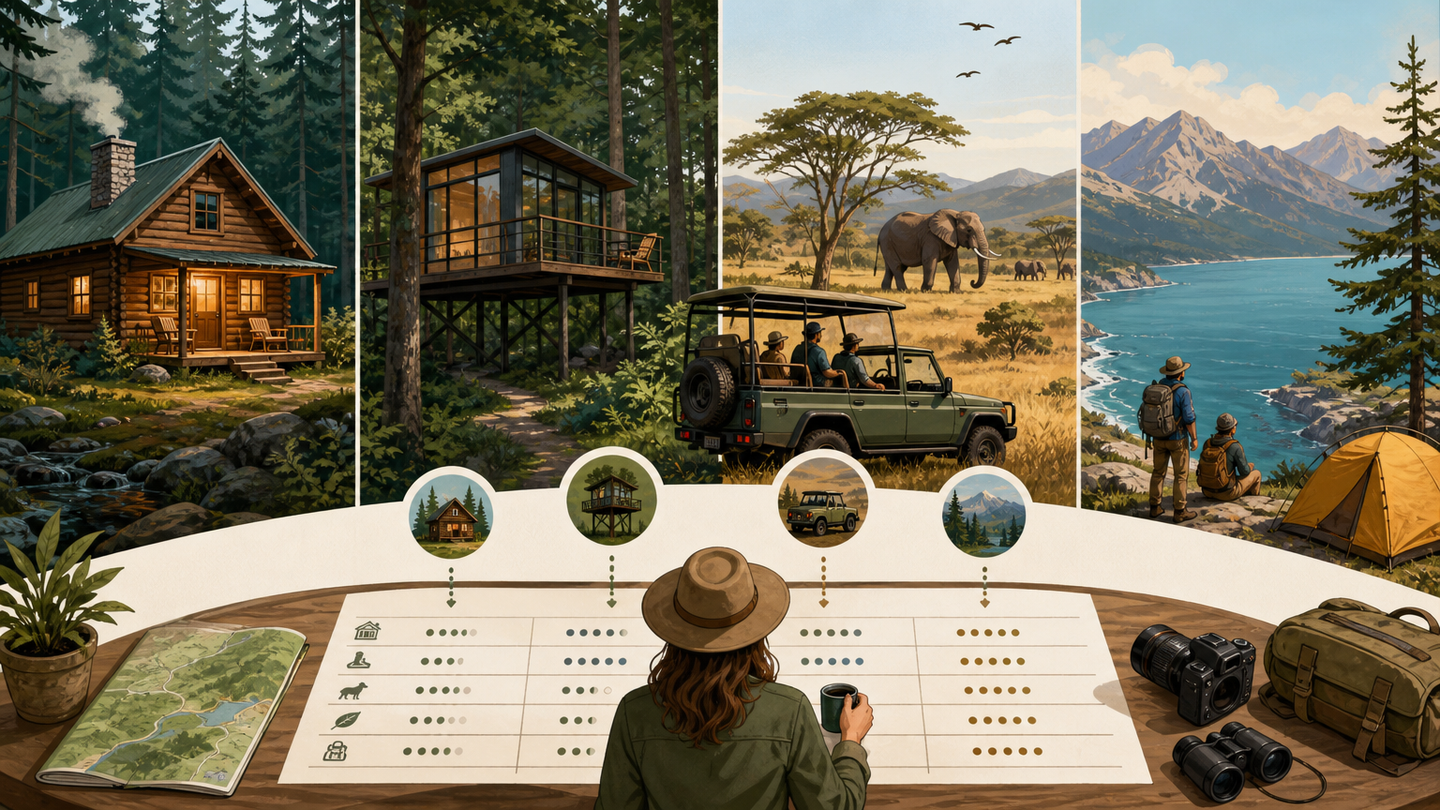
A nature-focused trip can mean very different things: a cabin that serves as a comfortable base, a campground deep in a forest, a lodging stay near scenic outdoor areas, or a getaway built around patient wildlife watching. The right choice is not the most remote or the most amenity-rich one. It is the option whose setting, comfort level, access, and responsibilities match the trip you actually want to take.
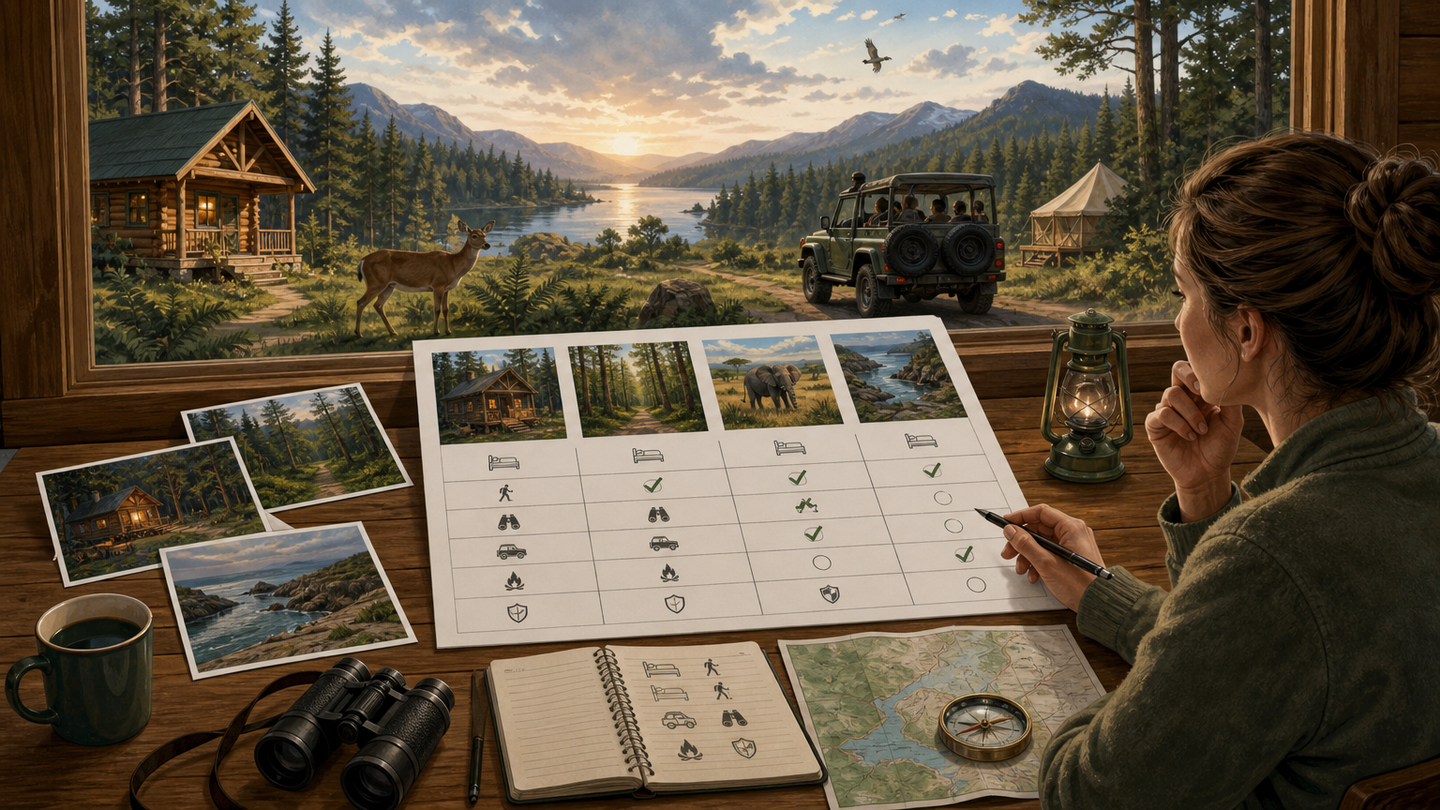
The easiest way to compare options is to separate the trip into four questions: Where will you sleep? How much self-sufficiency does the setting require? What outdoor experiences matter most? And how much uncertainty are you comfortable managing? Once those answers are clear, the differences between a cabin stay, a developed campground, a simpler forest site, and a wildlife-centered itinerary become much easier to weigh.
Start With the Experience You Want
A cabin or lodge-style stay usually works best when the accommodation itself is part of the retreat. You may want shelter from changing weather, a dependable place to return to after a walk or scenic drive, and a more settled rhythm for meals, rest, and packing. This choice can suit travelers who want time outdoors without making every part of the trip an outdoor task.
A campground shifts the emphasis toward the setting. Even among public-land campgrounds, facilities can range from relatively developed to quite minimal. That difference matters more than the word “campground” alone. A site with more services may reduce logistical work, while a simpler site can offer a stronger sense of being immersed in the landscape but demand more preparation and comfort with fewer conveniences.
A forest stay is less a single accommodation category than a style of trip. It may involve a cabin, campsite, or other lodging near trails, wooded roads, overlooks, and dispersed recreation opportunities. Its appeal is often flexibility: you can shape days around walking, driving, quiet time outdoors, or simply observing the conditions around you. In exchange, access can be more variable, and the distance between services may be greater.
A wildlife-focused trip is different again. Wildlife viewing is an activity that can enrich a cabin, campground, or forest itinerary, but it should not be treated as a guaranteed show. Choose it when you are happy to spend time moving slowly, looking carefully, and valuing the setting even if animals remain distant or unseen. The best wildlife itinerary leaves room for observation without making the entire trip feel unsuccessful if sightings are limited.
Compare Lodging, Access, and Daily Rhythm
Begin with the sleeping arrangement, then look outward. A cabin may offer a more protected base, whereas camping requires you to bring more of your own comfort system. Neither is automatically better. The useful question is whether you want to devote energy to camp setup, cooking, weather management, and packing—or preserve more of that energy for exploring.
Next, compare the level of development at the specific location. Do not assume that every forest cabin has the same utilities or that every campground has the same facilities. Individual sites can differ substantially, and reservation practices can differ as well. Planning tools that list camping and lodging can help narrow choices and review location and reservation details, but the individual facility information is what turns a broad idea into a practical plan.
Access deserves equal weight. Consider the route to the site, the condition of roads, the kind of vehicle needed, and how easy it will be to reach your planned activities once you arrive. A more remote option may be appealing precisely because it feels removed, but remoteness can also mean longer drives, less direct navigation, and fewer easy alternatives if conditions change. Carrying a paper map and compass provides a useful backup, particularly where signal or navigation tools may be less dependable.
Your preferred daily rhythm is another deciding factor. A cabin-centered getaway often favors a home-base pattern: head out, return, regroup, and go out again if you wish. Camping can favor a slower, place-based day in which the campsite is part of the experience. A wildlife itinerary may require the most patience and flexibility, since observation is shaped by conditions and animal behavior rather than a fixed schedule.
Plan Wildlife Viewing as an Activity, Not a Promise
Wildlife can make any nature trip memorable, but respectful viewing starts with distance. Animals are wild, and they should not be touched, fed, or harassed. Food storage is part of that responsibility: when animals obtain human food, the result can include unwanted and aggressive behavior.
Binoculars or a spotting scope are especially useful comparison points for a wildlife-oriented trip because they let you observe more while staying farther away. They also change the experience from pursuing an encounter to noticing behavior at a respectful distance. That approach is safer for both visitors and animals.
Distance rules are not identical everywhere. Many parks use a general guideline of 25 yards for most wildlife and 100 yards for bears and wolves, but local requirements can be different. Treat those figures as examples, not a substitute for the rules at the destination you choose. A trip built around wildlife should include time to learn the local expectations before heading out.
It also helps to compare places by the type of viewing they support rather than by an assumption that wildlife will be present. An open viewpoint, a quiet trail, a shoreline, or simply time spent outdoors may create opportunities to observe from afar. The experience remains worthwhile when the goal is attention and restraint rather than a close encounter.
Make Safety and Self-Sufficiency Part of the Comparison
The more self-contained and remote an option is, the more preparation belongs in the decision—not as an afterthought. Check the forecast before outdoor activities, and make a weather plan that includes what you will do if lightning threatens. An enclosed building or hard-topped vehicle is the appropriate shelter in that situation; a tent or open shelter is not an equivalent substitute.
Wooded, brushy, and grassy environments can also expose travelers to ticks. Compare destinations and activities with your willingness to take routine precautions, reduce exposure, and check for ticks after time outdoors. This is not a reason to avoid forests; it is one of the ordinary responsibilities of spending time there.
For trips involving forest roads, longer walks, or less-developed sites, share your plan with a trusted contact. Include where you expect to be, how you intend to travel, and when you expect to return. Road conditions and access needs can change the practical character of a trip, so build your plan around the route rather than the map distance alone.
Choose the Option That Fits Your Real Priorities
Choose a cabin or lodge-style stay when comfort, weather protection, and a reliable base matter most. Choose a developed campground when you want outdoor living with some structure and fewer unknowns. Choose a simpler forest site when immersion and independence are central to the appeal and you are prepared for limited amenities. Choose a wildlife-centered itinerary when patient observation, ethical distance, and flexibility matter more than certainty.
Many of the most satisfying getaways combine these categories: a comfortable cabin near forest access, a campground used as a base for quiet wildlife watching, or a forest lodging stay with a modest daily outdoor plan. The key is to avoid choosing by label alone. Compare the particular site, route, facilities, outdoor goals, and responsibilities, then select the arrangement that supports the pace of trip you want.
Before finalizing plans, confirm the destination’s current access conditions, facility details, reservation requirements, weather, and local wildlife rules. A well-matched nature getaway is not defined by how rugged it sounds; it is defined by how comfortably and responsibly it lets you spend time outdoors.
Information may contain errors, omissions, or outdated details. Confirm time-sensitive information with the relevant official or authoritative source.